Call Now


Types of Blinds: How to Choose the Right Blinds for Your Home
TIPS
Posted 30/09/2026
Think all blinds do pretty much the same job? Think again.
From classic Rollers and Romans to clever Day & Night designs, no-drill fittings, and blackout options, there’s plenty to get your head around. So buckle up: we’re breaking down the different types of blinds, what they’re best for, and how to choose the right ones for your home.
Roller blinds
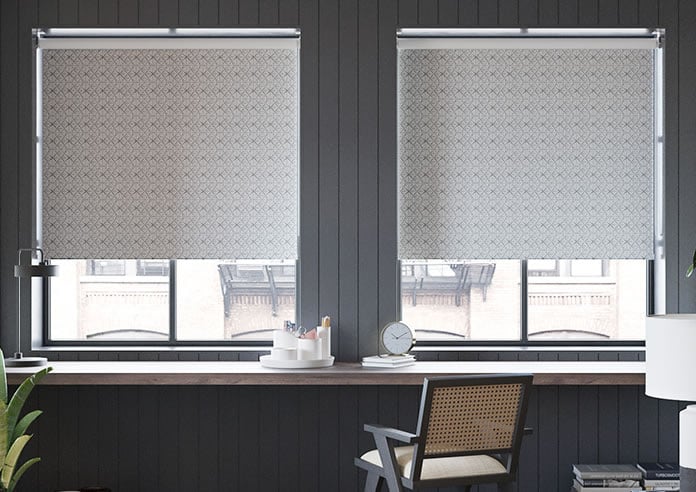
Roller blinds are the dependable classic. The Ronseal of blinds, let’s say. Roller blinds are made from a single piece of fabric that rolls neatly around a tube. They’re simple to use, give you easy control over light and privacy, and come in a huge choice of colours, patterns, and fabrics.
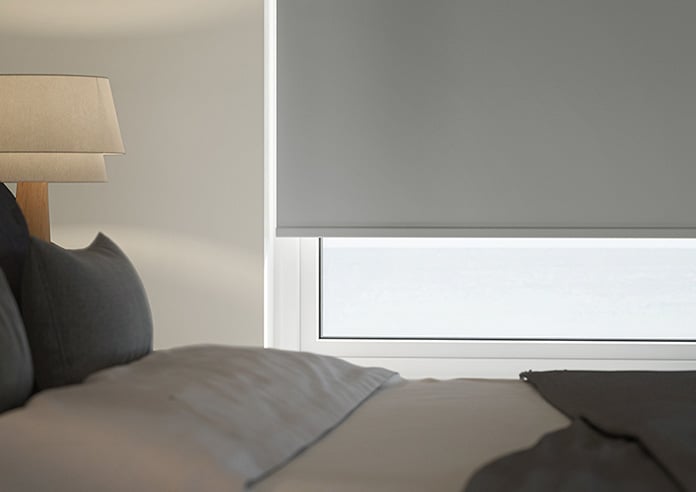
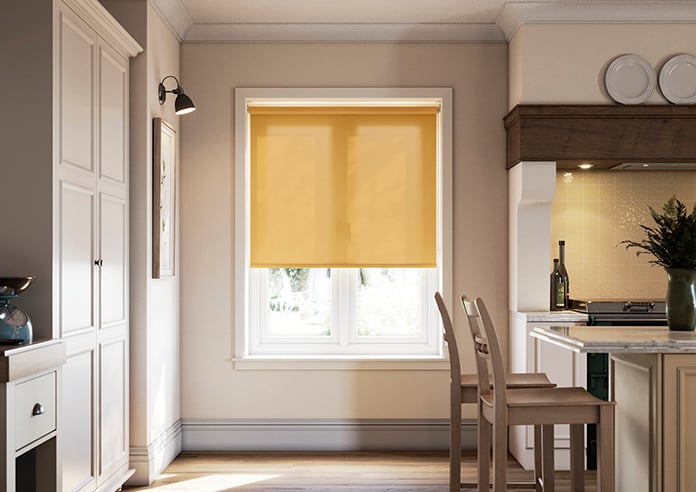
They’re also incredibly versatile. Depending on the fabric you choose, you can add features such as blackout, thermal, or water-resistant finishes, making Roller blinds suitable for pretty much any room in the house. Think bedrooms, living rooms, kitchens and even bathrooms with the right moisture-resistant fabric.
Simple, gets the job done, and loads of options to make them your own – sometimes, you just can’t beat a classic.
Roman blinds
Introducing another classic. Roman blinds have been around in some form since – you’ve guessed it – Roman times. But that certainly doesn’t mean they look dated.
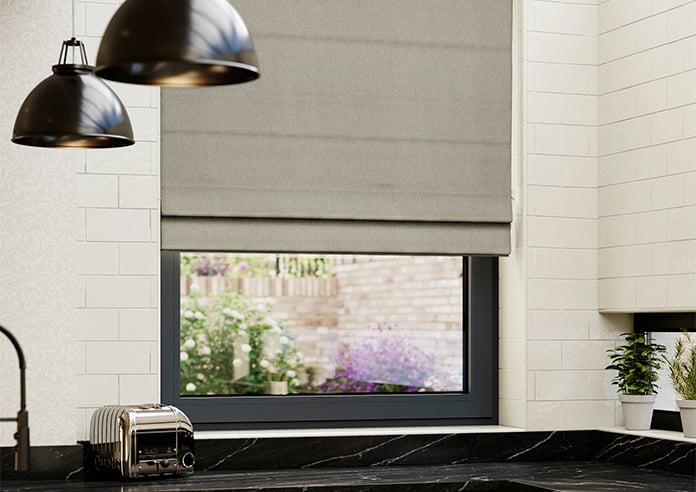
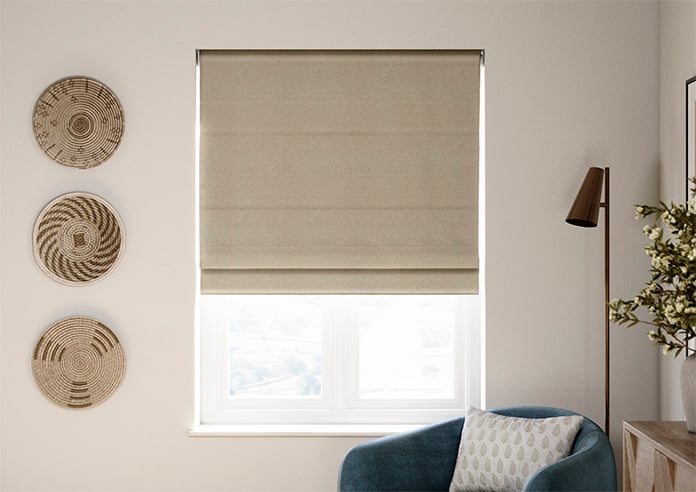
Made from fabric, Roman blinds sit flat when closed before folding into soft pleats as you raise them. That gives them a softer, more decorative finish than something like a Roller blind, while still offering plenty of flexibility when it comes to colours, patterns, and optional linings.
Blackout and thermal linings can make Roman blinds even more practical, while their cosier feel makes them particularly at home in bedrooms, living rooms, and dining rooms. Because of their softer fabrics, however, they’re generally less suited to particularly humid or splash-prone spaces.
If you want practicality with a slightly more luxurious finish, Romans could be the one.
Venetian blinds
Want more control over exactly how much light gets in? Say hello to Venetian blinds.
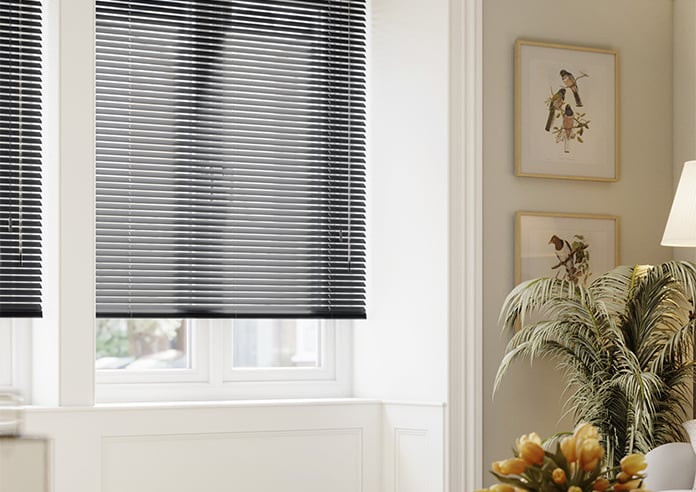
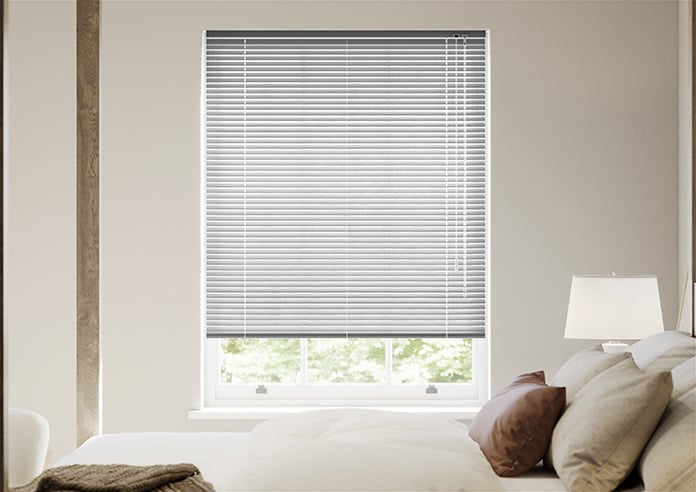
Rather than fabric, Venetian blinds use horizontal slats that can be tilted to adjust light and privacy throughout the day. Angle them to soften direct sunlight or screen an overlooked window while still letting daylight in, then close them when you want more coverage.
They work well in all sorts of spaces, from living rooms and bedrooms to kitchens and home offices. They’re particularly handy if screen glare is a problem, as you can adjust the angle of the slats without necessarily blocking the light completely.
The slatted design means they’re not the obvious option if you’re all about bold prints and patterns, but there’s still plenty of choice when it comes to colour and finish.
Vertical blinds
Like the idea of adjustable slats but want something softer? Vertical blinds use vertical fabric panels that tilt to control light and privacy, while drawing sideways when you want to open them up completely.

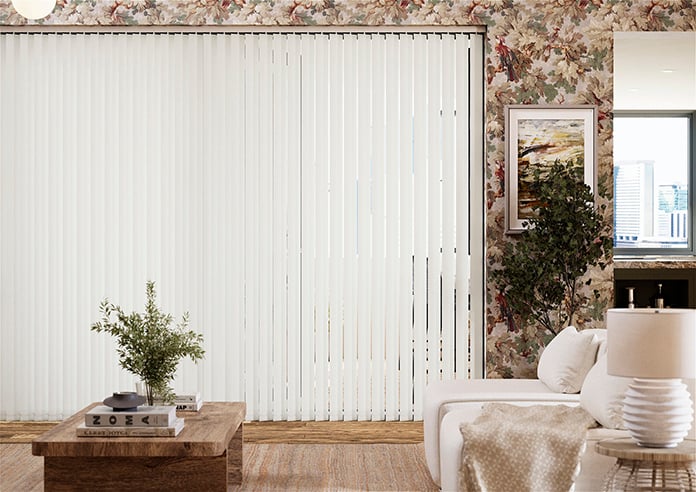
Particularly large space? Vertical blinds could become your new BFF. Their design makes them particularly handy for larger windows and wide openings. They’re right at home in living rooms and offices, but they really come into their own across patio or French doors.
The slatted design lends itself more naturally to block colours than detailed patterns, but that still leaves plenty of room to play with colour, whether you want something bold or a subtle neutral.
Wooden blinds
Wooden blinds take the classic horizontal slats of a Venetian blind and give them a natural wooden finish.
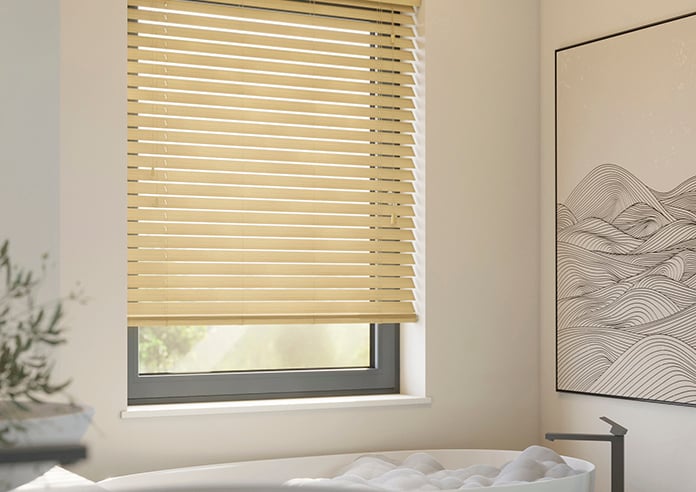
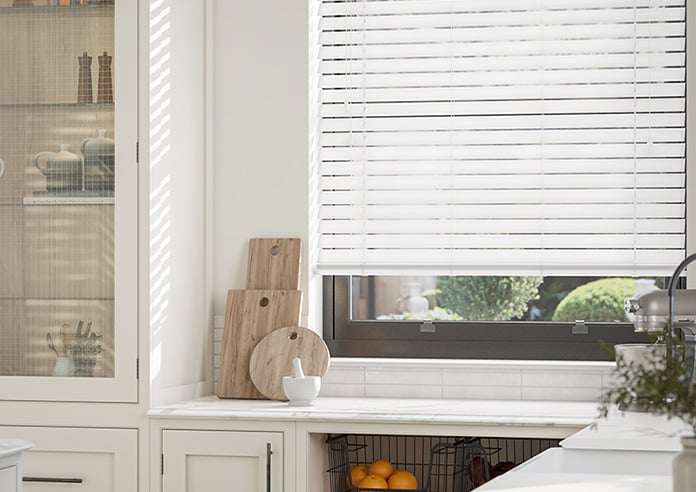
That means you get the same adjustable light and privacy control, but with a warmer look that can bring a more premium feel to any room. Maybe you’re thinking you should avoid wood in rooms with a splash risk, but there are even faux wood options for bathrooms and kitchens.
Wood never really goes out of style, either, making these a solid choice if you want something practical that brings a little character, while standing the test of time.
Day & night blinds
Day & Night blinds – sometimes called Zebra blinds, and you’ll soon see why – are made with alternating sheer and opaque fabric panels. By adjusting how those panels overlap, you can change the balance between incoming light and privacy without constantly raising and lowering the entire blind.
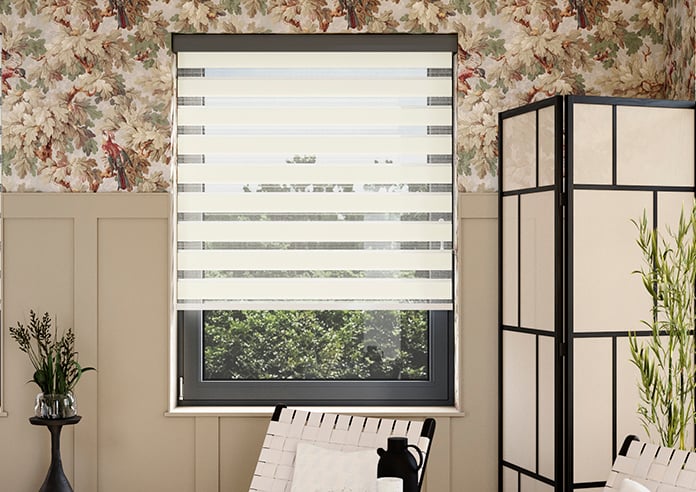
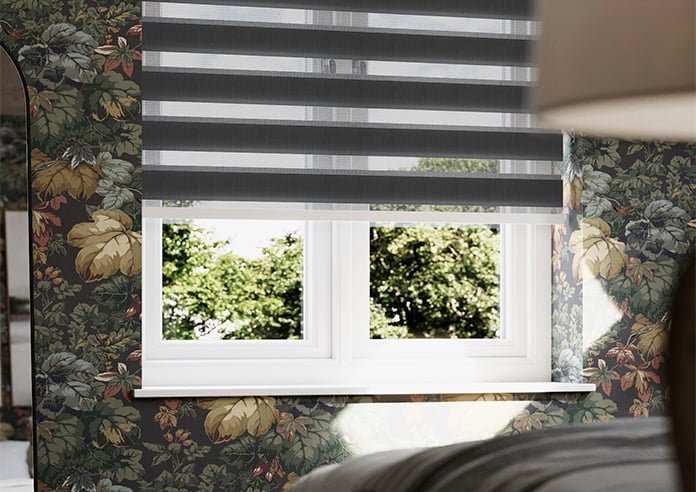
That makes them a great choice for spaces where your needs change throughout the day. Living rooms, bedrooms, and home offices can all benefit from the extra flexibility.
Want to see them in action? Take a look at our Day & Night blind video explainer to see how these nifty blinds work.
Pleated and honeycomb blinds
Pleated blinds are made from fabric that folds neatly into a concertina as the blind is raised, giving them a slim, subtle finish at the window. Honeycomb designs take that structure one step further, using cellular pockets that create an additional insulating layer at the window.
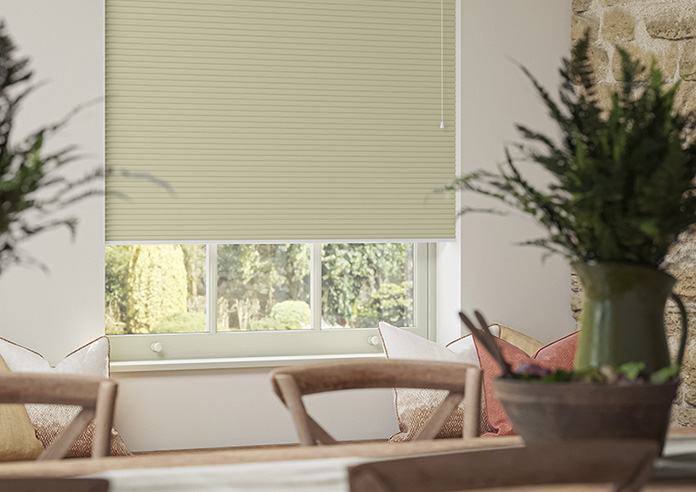
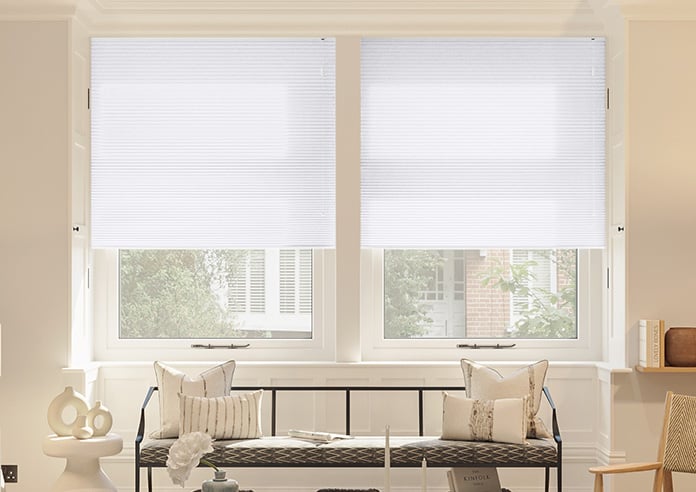
That can help reduce heat transfer, keeping things warmer in winter and cooler in summer. Pretty clever for a blind, really. Their neat fit means they can work well in bedrooms and living rooms, while the added insulation can also make them particularly handy in conservatories.
Ultra-Blackout Blinds
Want to take blackout a step further? Our Ultra Blackout blinds combine honeycomb pleated fabric with a fully enclosed frame, helping to block light from entering around the edges of the blind as well as through the fabric itself.
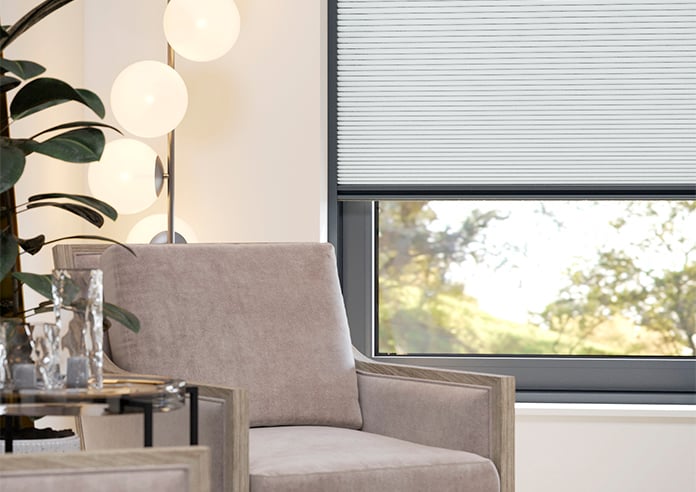
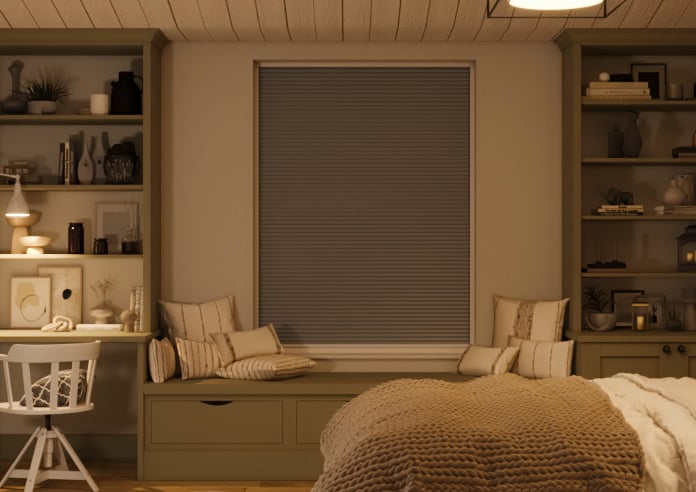
This nifty honeycomb design also traps air within the pleats, so you can keep rooms cooler in summer and warmer in winter. It’s a win-win situation, really! And, better still, they’re cordless – a bonus for households with pets or small children, where safety is a natural concern.
If blackout is the goal, ultra-blackout is the blind for you.
Perfect Fit, Clip Fit, Stick Fit Blinds
If you want a neat, built-in look without reaching for the drill, our Perfect Fit, Clip Fit and Stick Fit blinds tick all the boxes. They’re designed to attach directly to the window, sitting neatly within the frame.
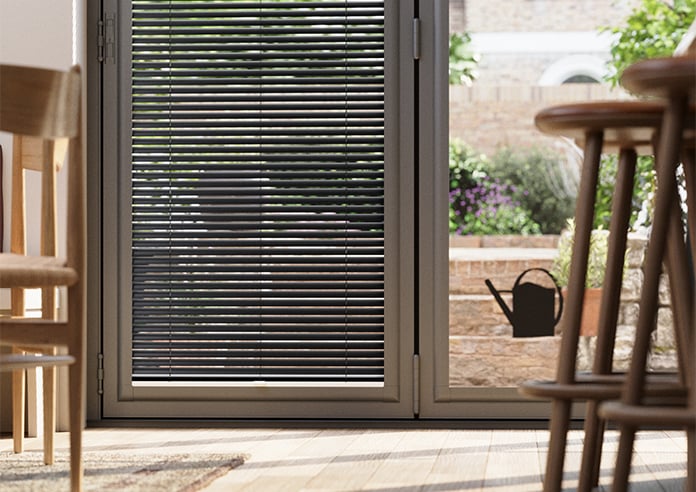
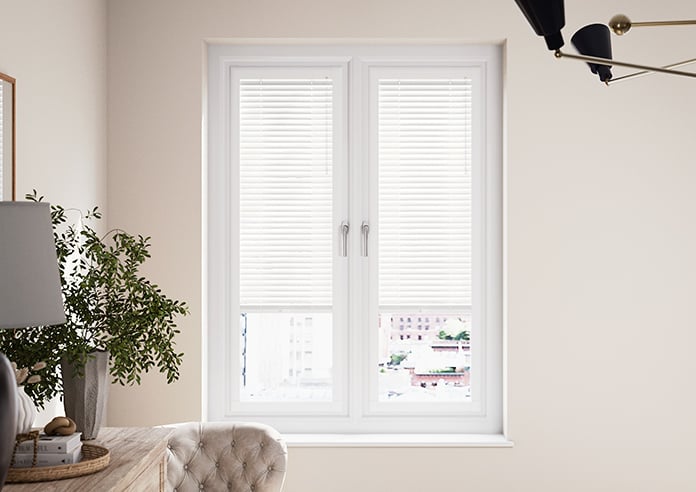
Between these three types, the end result is similar, but the way each blind attaches is different. Perfect Fit and Clip Fit both clip into place – Perfect Fit into a dedicated frame, and Clip Fit within the existing window frame – while Stick Fit uses adhesive rather than clips or brackets.
If you love the sleek, streamlined look of Perfect Fit but your window gaskets aren’t compatible, you’ll find Clip or Stick Fit to be an excellent alternative.
The blinds are raised and lowered inside channels using a handle, not a cord, making them a practical choice if child or pet safety is a priority.
Still not sure? We don't like to pick favourites, but browsing our most popular products might give you the burst of inspiration you are looking for.
Browse our bestselling blinds and see what customers like you are loving.
What are the main types of window blinds? An overview
Fancy the skimmable version? We’ve got you.
| Type | Best for | Light control | Price | Good rooms |
|---|---|---|---|---|
| Roller | Simple, versatile all-rounder | Good | £ | Most rooms |
| Roman | Soft, decorative finish | Good | ££ | Bedrooms, living rooms, dining rooms |
| Venetian | Precise light and privacy control | Excellent | £ | Living rooms, bedrooms, offices, kitchens (material depending) |
| Vertical | Large windows and patio doors | Excellent | £ | Living rooms, offices, patio/French doors |
| Wooden | Natural look with adjustable light control | Excellent | ££ | Living rooms, bedrooms, dining rooms |
| Day & Night | Balancing daylight and privacy | Excellent | ££ | Living rooms, bedrooms, home offices |
| Pleated / Honeycomb | Neat fit and extra insulation | Good | ££ | Bedrooms, living rooms, conservatories |
| Perfect Fit | A built-in look without drilling | Varies by blind | £££ | Most rooms, depending on window |
| Clip Fit / Stick Fit | Easy, no-drill fitting directly to the window | Varies by blind | ££ | Most rooms, depending on window |
What about shutters?
Okay, so technically, shutters aren’t blinds. But if you’re weighing up different ways to dress your windows, they’re definitely worth knowing about.
Plantation shutters use solid frames with adjustable slats, giving you plenty of control over light and privacy while creating a more permanent feature at the window. Tilt the slats to let the daylight in, adjust them when you want a little more privacy, or close them up when you want more coverage.
They’re available in real wood or waterproof faux wood, and there are no-drill variations of shutters too.
They’re a different proposition to most blinds – and usually a bit more of an investment – but if you love the classic shutter look, they could be well worth considering.
What's the cheapest type of blind?
The cost of any blind depends on its size, material, finish and any additional features you choose. Generally, simple Roller and Vertical blinds can be among the more budget-friendly styles, so they're good places to start if keeping costs down is a priority.
More options to customise your blinds
We know, we know – we’ve covered a lot already. But choosing your favourite blind type is just the beginning.
Different fabrics, fitting methods, and optional features can all change how your blinds work. So once you’ve found a style you love, you can start thinking about the extras that matter most to you.
Here are some of the features you can choose from…
No-drill blinds for simple installation
Not a natural DIY-er? No worries.
No-drill blinds are exactly what they sound like: blinds that can be fitted without drilling holes around your window.
Our no-drill options include Perfect Fit, Stick Fit and Clip Fit systems – which we’ve covered above – as well as Twist&Fit blinds, giving you different ways to skip the drill depending on the blind and window you choose.
Twist&Fit is designed to look and feel like the drill-fitted version of the blinds you choose. The difference? No need to worry about a drill; they simply twist into place.
You should also consider the room you’re decking out – Twist&Fit may not be as effective in bathrooms, where smooth tiles don’t offer enough friction to hold them securely in place. For standard windows, though, they’re an excellent, versatile option that leaves DIY headaches at the door.
No-drill blinds are an obvious option for renters who want to avoid leaving holes behind, but you certainly don’t need to be renting to appreciate an easier fit. If the thought of hunting down the toolbox fills you with dread, these are the blinds for you.
Blackout blinds for darkness
Bedroom not quite dark enough? Street lights outside? Summer mornings arriving approximately five minutes after you’ve gone to sleep? Blackout blinds could be your saviour.
Blackout fabrics and linings are available across different types of blinds and are designed to reduce the amount of outside light entering the room. Unsurprisingly, that makes them particularly popular for nurseries and children’s rooms. We can’t promise a totally restful night – when can you ever make that promise where children are involved? – but creating a darker environment can certainly help set the scene for sleep.
They're not just for little ones, though. Blackout blinds are equally popular in adult bedrooms, helping to reduce early morning light and create a darker space for sleeping. It’s worth mentioning that blackout blinds make a room significantly darker, but they can’t usually block every last scrap of light. Light can enter through the hem at the bottom of the blind if they’re not lined, or through the gap between the blind and the wall. This means it’s more important than ever to get a precise fit for the best possible results.
Blackout options can also be useful for reducing glare in living rooms, home offices, and TV or cinema rooms. And if you want to go darker still, take a look at our Ultra Blackout blinds.
Thermal blinds for extra insulation
Thermal blinds are designed to help reduce heat transfer at your windows. That means they can help keep warmth in during colder months while also reducing the amount of heat entering through the window when temperatures climb.
That can make them particularly useful in bedrooms and busy living spaces, as well as rooms where temperature can be harder to manage, such as conservatories.
If energy efficiency, draughty windows, or simply keeping your room more comfortable are priorities, thermal options are well worth a look.
Waterproof blinds for splash-prone rooms
Bathrooms and kitchens ask a little more of their blinds. Humidity, condensation, and the occasional splash mean choosing a suitable material matters.
Waterproof or moisture-resistant blinds are designed with these spaces in mind. Depending on the blind type and material, they can offer a practical, easy-to-clean finish that won’t mind life around sinks, showers, and steamy rooms quite as much as more delicate fabrics.
Motorised blinds for effortless operation
Can blinds be motorised? You bet they can.
Motorised blinds are operated electronically rather than manually, making opening and closing them that little bit easier. They can be handy for taller or hard-to-reach windows, or for anyone looking for a more accessible way to operate their blinds.
And sometimes, it’s just about convenience. Watching TV and the sun suddenly hits the screen? One button, sorted. Sofa time uninterrupted.
They can work throughout the home, but rooms where you regularly adjust your blinds – such as living rooms and home offices – are particularly natural fits.
And remember: these features don’t necessarily exist in isolation. Blackout or thermal? No-drill or motorised? Who says you have to choose? Depending on the blind you go for, you may be able to combine the features and styles that matter to you.
If one feature is a dealbreaker, start there and explore the blind types available with it. If style comes first, choose the blind you love and then see which practical extras you can add.